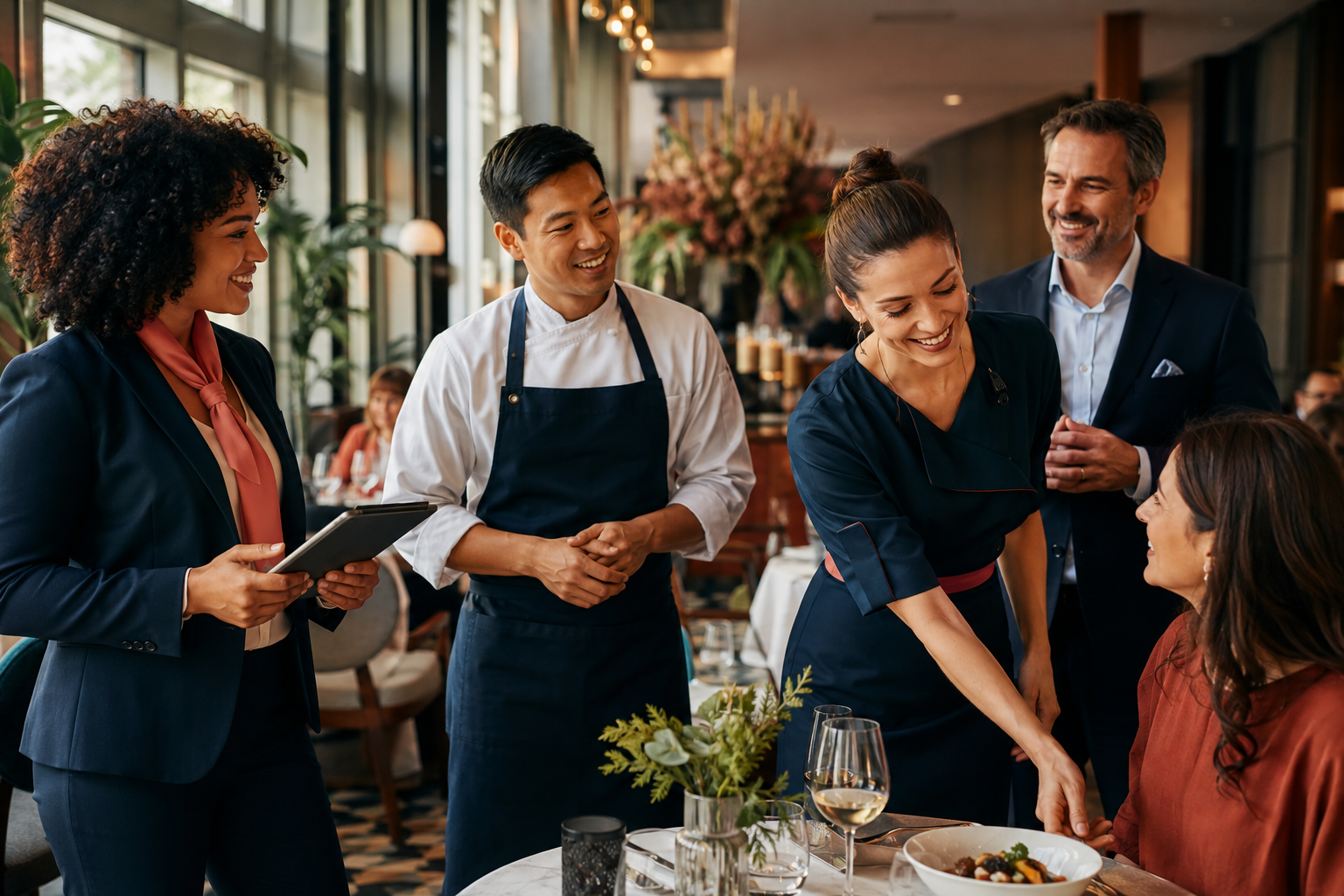
A hotel can automate a confirmation email. A restaurant can use software to organize reservations. A manager can build a schedule faster with better tools. None of that changes the reason guests return: they remember how people made them feel.
Hospitality happens in moments that rarely follow a perfect script. A family arrives early after a difficult flight. A banquet timeline changes ten minutes before the doors open. A guest has an allergy that requires the kitchen and service team to think together. A new employee needs encouragement during a demanding first shift. Technology can provide information, but a person must understand the moment.
Some decisions require human judgment
A front desk professional knows when a guest needs a quick solution and when they simply need someone to listen. A server reads the pace of a table without being asked. A housekeeper notices the small detail that makes a room feel cared for. A cook adjusts when an ingredient, ticket, or piece of equipment does not cooperate.
These are not small extras around the edges of hospitality. They are the work. They require awareness, timing, empathy, experience, and the confidence to make a good decision without waiting for a perfect instruction.
Better tools can make better jobs
The useful question is not whether technology will enter hospitality—it already has. The better question is whether it removes unnecessary friction so employees can spend more energy on guests, teamwork, and craft.
When software handles repetitive data entry, helps predict inventory, or makes a handoff clearer, it can give people more time to do the work that only people do well. The best technology stays in the background. It supports the employee instead of becoming the experience.
The most valuable skills are becoming clearer
As tools improve, distinctly human skills become more important, not less. Communication, composure, leadership, problem-solving, creativity, cultural awareness, and genuine care will continue to separate an adequate shift from an excellent one.
Hospitality has always adapted—from handwritten reservation books to modern booking systems, and from paper tickets to digital kitchens. Through every change, the heart of the business has remained surprisingly steady: people welcoming people.
The future is not hospitality employees competing against technology. It is capable people using better tools while delivering something no system can manufacture: a guest feeling seen, understood, and glad they came.